Assistive Technology for Education and Lifelong Learning
By Randy Kiser, Community Living, Inc., Senior Business Development Manager
Learning is a lifelong journey, and assistive technology (AT) helps people with intellectual and developmental disabilities (IDD) continue building knowledge and skills throughout every stage of life. Whether someone is learning to read, developing job skills, attending college, or participating in community education, AT reduces barriers and creates more opportunities for success. The goal is not simply to complete educational tasks but to build confidence, independence, and meaningful participation.
Many traditional AT tools remain highly effective. Visual schedules, graphic organizers, adapted keyboards, pencil grips, color-coded materials, communication boards, and hands-on manipulatives help learners understand information and stay organized. Reading supports such as digital audiobooks, text-to-speech software, and picture-supported text improve comprehension and increase access to educational materials. Speech-to-text software and word prediction tools also make it easier for individuals to express their ideas through writing while promoting greater independence.
Artificial intelligence is making educational technology even more personalized. AI-powered learning platforms can simplify complex reading passages, define unfamiliar vocabulary, adjust reading levels, provide individualized practice, and offer step-by-step hints when learners encounter challenges. AI writing assistants help organize thoughts, improve grammar, and strengthen written communication, while interactive tutoring systems provide coaching that encourages critical thinking rather than simply supplying answers. These technologies allow learners to progress at their own pace while receiving support tailored to their individual needs.
Communication is another essential part of learning. Augmentative and Alternative Communication (AAC) devices and communication apps enable students to ask questions, participate in classroom discussions, complete assignments, and demonstrate what they know. Tablets and mobile devices allow educators and support professionals to customize learning activities based on a person’s strengths, interests, and learning style. Together, assistive technology, AI, quality instruction, and person-centered supports empower people with IDD to become lifelong learners who continue developing new skills for employment, independent living, and active participation in their communities.
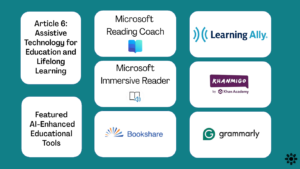
Featured AI-Enhanced Educational Tools
· Microsoft Reading Coach – Uses AI to provide personalized reading practice, pronunciation feedback, and reading fluency coaching.
· Microsoft Immersive Reader – Offers text-to-speech, syllable highlighting, translation, picture dictionary features, and customizable reading displays to improve comprehension.
· Bookshare – A digital library providing accessible books in audio, large print, Braille, and other customizable formats for individuals with print disabilities.
· Learning Ally – Delivers professionally narrated audiobooks that support students with reading disabilities and improve access to grade-level curriculum.
· Khanmigo (Khan Academy) – An AI-powered tutor that guides learners through academic concepts with hints, explanations, and coaching rather than simply providing answers.
· Grammarly – AI writing assistance that helps users improve spelling, grammar, sentence structure, organization, and overall clarity while building independent writing skills.
These AI-enhanced tools demonstrate how technology can personalize learning while complementing, not replacing, the expertise of teachers, support professionals, and families. When thoughtfully integrated into educational settings, they help individuals with IDD gain knowledge, build confidence, and continue learning throughout their lives.